HEARTITUDE=ART+SOUL
  • Home
  • CLASSES
    • ON-DEMAND CLASSES
  • GALLERY
    • Portraits of Pets
    • Hand Painted Silk Scarves
    • Watercolor Birds
    • Fiber Arts
  • SOUL
  • Contact
  • Student Gallery
  • ONLINE STORE
  • Home
  • CLASSES
    • ON-DEMAND CLASSES
  • GALLERY
    • Portraits of Pets
    • Hand Painted Silk Scarves
    • Watercolor Birds
    • Fiber Arts
  • SOUL
  • Contact
  • Student Gallery
  • ONLINE STORE
Search

The "Swatch This" Challenge Day 13

1/14/2021

0 Comments

 
Picture
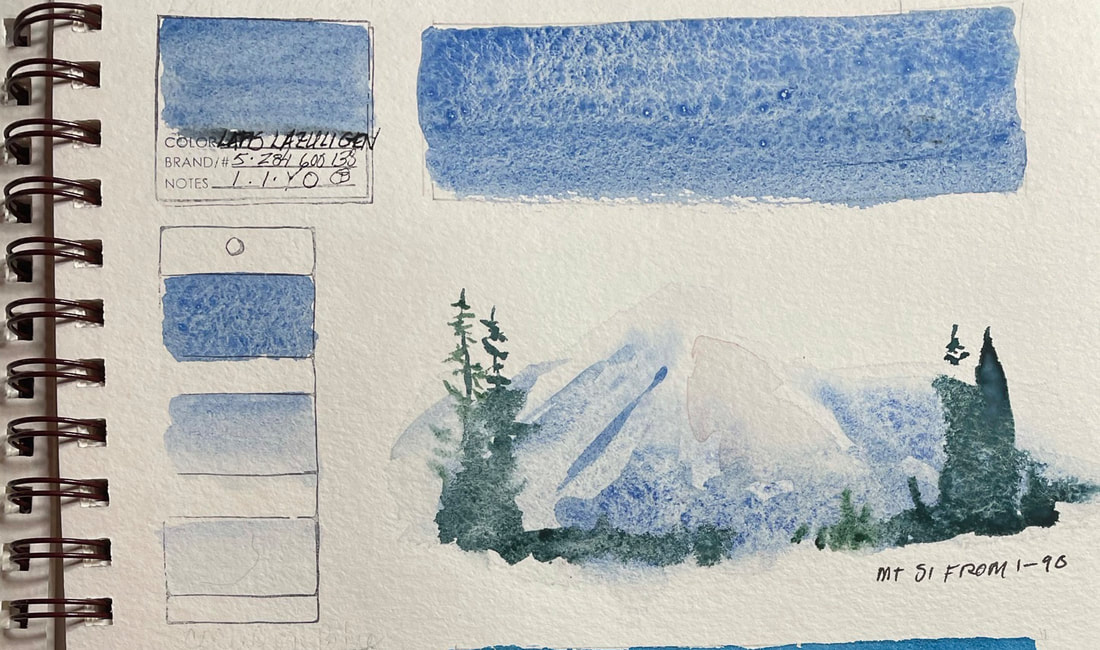
Technical Data:
​Pigment: Genuine Lapis Lazuli |
Series: 5

Lightfastness: I – Excellent
Transparency: Transparent
Staining: 1-Non-Staining
Granulation: Granulating

LAPIS LAZULI GENUINE

Lapis Lazuli has been prized for its beauty and its perfection. Ancient civilizations believed that the veins of glittering pyrite (fool's gold) in the lapis were actual gold, making it even more valuable.  Today as in the ancient world, extraction is difficult due to the hardness of the stone. It can only be mined during the warmest months from mines in the mountains of South America. The subtle blue grey, denim color of the this light reflective granulating pigment makes it as interesting as it is unpredictable with surprising results.
0 Comments

The "Swatch This" Challenge Day 12

1/14/2021

0 Comments

 
Picture
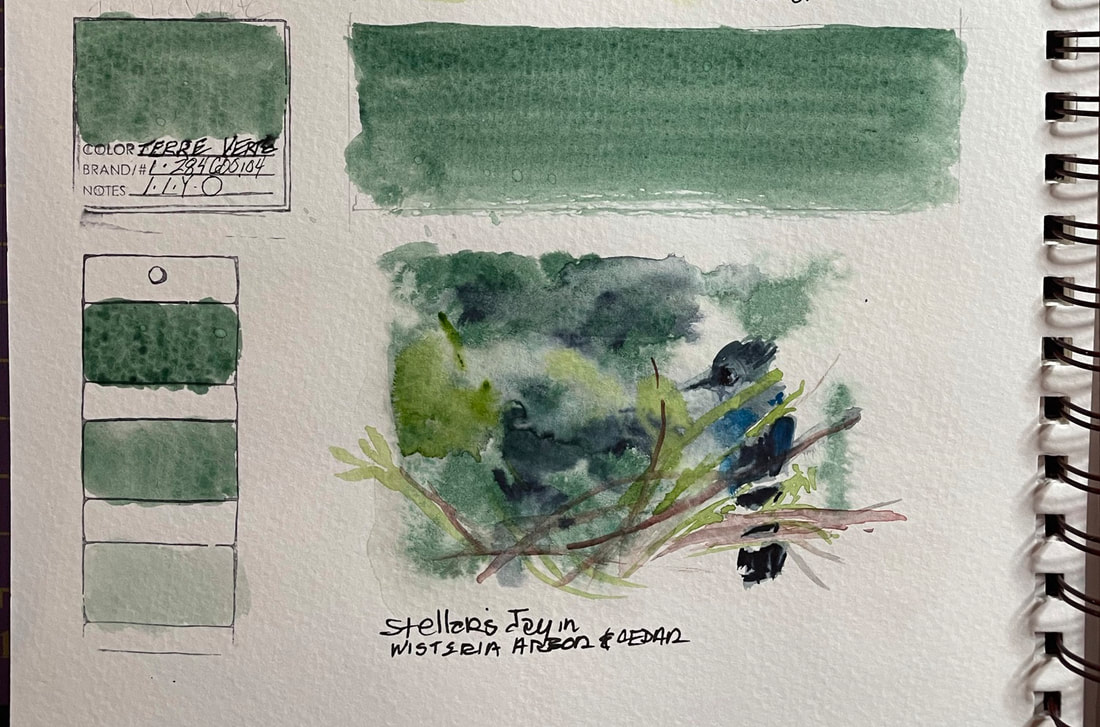
Technical Data:
Pigment: PG 18, PBr 7 |
​Series: 1

Lightfastness: I – Excellent
Transparency: Transparent
Staining: 1-Non-Staining
Granulation: Granulating

TERRE VERTE

Terre Verte,  green earth, is a classic green that transparent and non-staining, Daniel Smith calls it  "a lightfast formulation of Viridian and Raw Umber".  They suggest using Terre Verte with Undersea Green and Raw Umber Violet for natural-looking landscapes.  I find it to be granulating to some extent, floats nicely into a watery wash and a nice green the bluish side, excellent for rendering the evergreen forests in the Pacific Northwest.
0 Comments

The "Swatch This" Challenge Day 11

1/11/2021

0 Comments

 
Picture
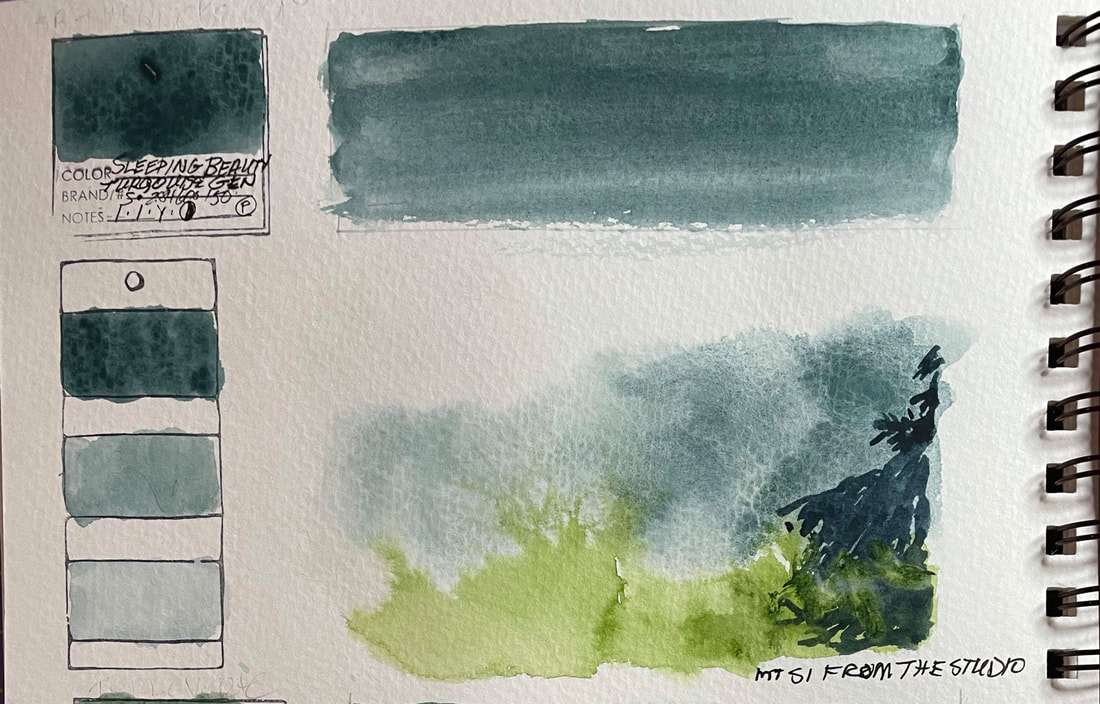
Technical Data:

Pigment: Genuine Sleeping Beauty Turquoise | Series: 5
Lightfastness: I – Excellent
Transparency: Semi-Transparent
Staining: 1-Non-Staining
Granulation: Granulating

​

SLEEPING BEAUTY TURQUOISE

Daniel Smith calls Sleeping Beauty Turquoise a "unique and vibrant blue" although I see more green than blue. The pigment is one of their "Primaktek" gemstones and is named for the location they found it in the Sleeping Beauty Mountain in Arizona.
Since 1998, Daniel Smith has been procuring and grinding a special line of pigments from gemstones. "Primatek" pigments are beautiful granulators that often break down into several other colors. They have produced high quality, luminous pigments that for the most part are lightfast. While they say Sleeping Beauty Turquoise is lightfast, I have read differing results from artists who have done their own lightfastness test. 
The first use of Turquoise as pigment dates back to Egyptian "blue"  from the Bronze age and civilizations have found deeply spiritual qualities and meaning in the color ever since. It has been deemed precious  both for the gemstones rarity as well as the difficulty refining and making the exact hue desired.

0 Comments

The "Swatch This" Challenge Day 10

1/10/2021

0 Comments

 
Picture

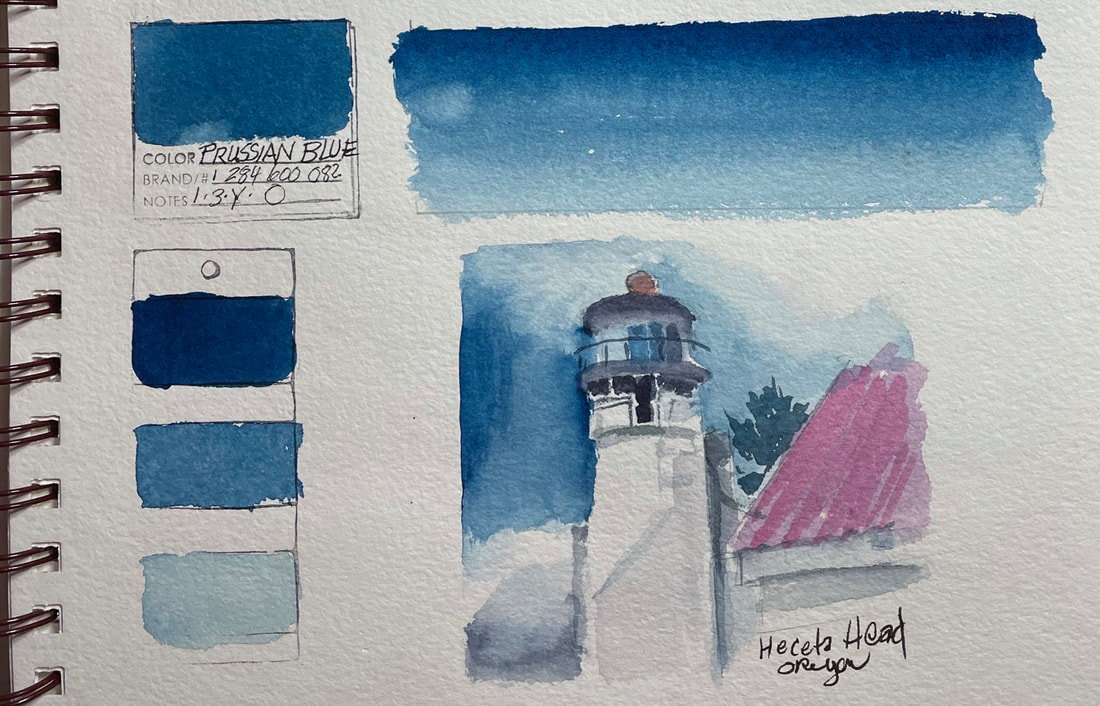
PRUSSIAN BLUE

Technical Data:

Pigment: PB 27 | Series: 1
Lightfastness: I – Excellent
Transparency: Transparent
Staining: 3-Medium Staining
Granulation: Granulating
Prussian Blue is lightfast and transparent, with medium to high staining strength. Daniel Smith says that it can be considered interchangeable with the Phthalo Blue which is higher staining. I have Phthalo Blue Green Shade on my standard palette as well as Prussian Blue and admit that I have at times confused the two.
 What is a "staining" Pigment?
Pretty much what it sounds like,  a pigment that is very strong and leaves a mark.
Prussian blue is one but not as much of a brute as the Phthalo colors, Alizarin Crimson, most of the Cadmiums, Permanent Magenta, Hansa Yellow, Hooker’s Green, Indigo and Payne’s Gray, among others. Daniel Smith's Anthraquinoid Red, Perinone Orange all the Quinacridones.*  Stainers flow beautiful and put down wet, mingle with other colors. As long as the are wet, staining pigments can be lifted and washed back, but once dry, they are a force to be reckoned with. Staining pigments have strong clear color, and can be used well as a first wash. But there is a drawback, if you try to glaze over a stainer with another stainer or worse yet two more, the color on top will kill the under color and flatten the top color out. 


*See "Caroline Buchanan: Making Sense of Staining, Sedimentary and Transparent Pigments" an article for Dan Smith here
0 Comments

The "Swatch This" Challenge Day 9

1/10/2021

0 Comments

 
Picture
Technical Data:

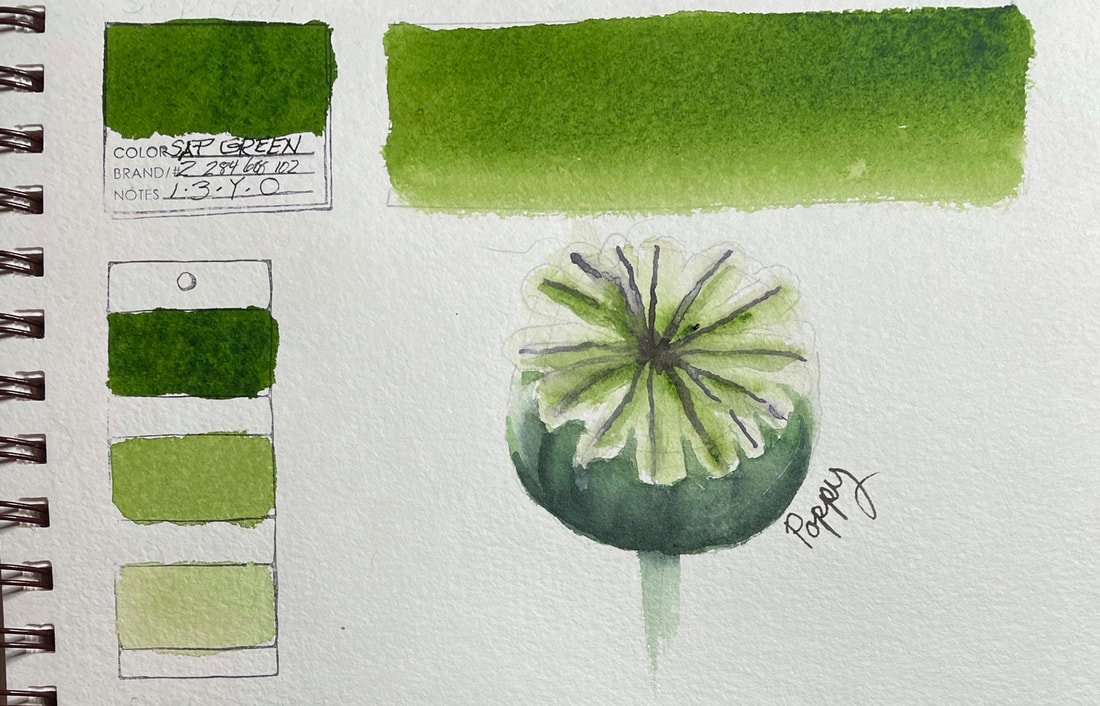
Pigment: PB 27, PY 3, PO 48 | Series: 2
Lightfastness: II – Very Good
Transparency: Transparent
Staining: 3-Medium Staining
Granulation: Non-Granulating

​
​

SAP GREEN

Sap Green builds to a very dark, nearly black layered and used full strength but has great transparency and makes smooth washes that can be lifted easily even though it is a staining color. well for a staining color. Because it is made with three pigments, it may not always play nicely with every color in a mix. Daniel Smith recommends mixing it with "Pyrrol Orange to make a stellar redwood brown and Rhodonite Genuine for an interesting neutral blend".  
How Many Greens Must You Own?
Artist Jane Blundell has five greens in her 24 color palette, one of them being Sap Green. While she generally prefers single pigment greens, she suggests that if you only have two greens, choose Sap Green  or Undersea Green for a warm and Phthalo Green BS for your cool green.
0 Comments

The "Swatch This" Challenge Day 8

1/8/2021

0 Comments

 
Picture
Technical Data:

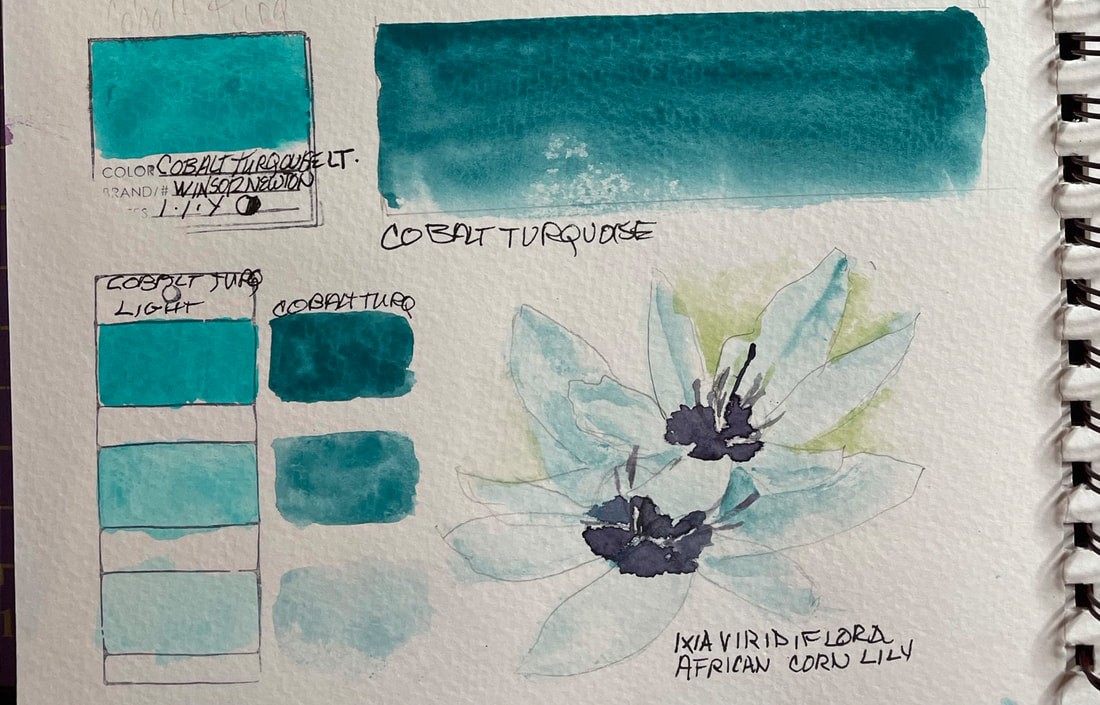
Pigment: PB 36 | Series: 3

Lightfastness: I – Excellent
Transparency: Semi-Transparent
Staining: 1-Non-Staining
Granulation: Granulating

COBALT TURQUOISE 

 Cobalt Turquoise is a non-staining teal blue that layers and granulates.  Cobalt was first discovered  as an element in 1755 and  the first cobalt pigment to be developed was cobalt green in 1780. Cobalt Blue was developed in 1802 . During the 19th century at least two cobalt violets became available and a cobalt yellow. In the 20th century improved new cobalt greens, cerulean, and turquoise cobalt pigments were developed. Cobalt pigments are amongst the most permanent. 
Cobalt Turquoise is a compound of cobalt and chromium. it is related to the chromium agent that gives emeralds their green color. Landscape and maritime painters value this ocean colored pigment for its ability to portray the sea and even eucalyptus.

From: Matisse Professional Artist's Acrylics and Mediums
0 Comments

The "Swatch This" Challenge Day 7

1/7/2021

0 Comments

 
Picture
Technical Data:

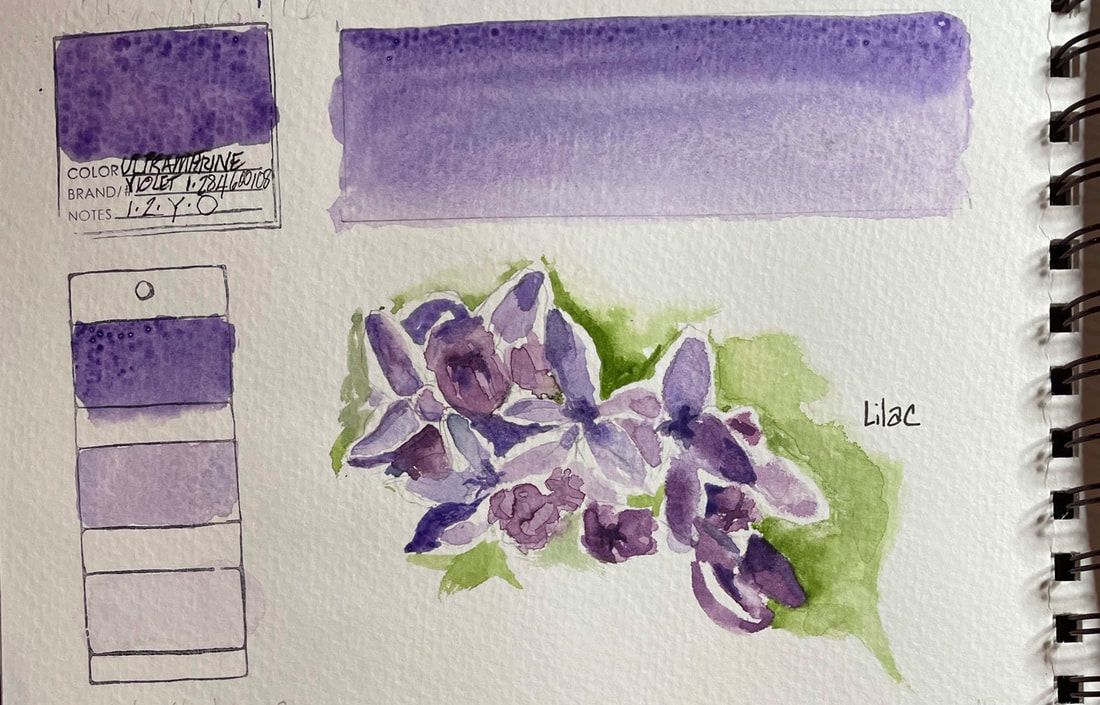
Pigment: PV 15 | Series: 1
Lightfastness: I – Excellent
Transparency: Transparent
Staining: 2-Low Staining
Granulation: Granulating

ULTRAMARINE VIOLET

This granulator flows freely and leaves a mottled effect if misted. Ultramarine Violet is low-staining  but extremely lightfast. This is another of the 12 Colors of Inspiration HAND POURED Watercolor Half Pan Set from DANIEL SMITH who says that Ultramarine Blue pigment is baked to create Ultramarine Violet.
​What does it mean to bake a color? Artificial Ultramarine
 also known as French ultramarine is made by heating a ground mixture of China clay, soda ash, coal or wood, charcoal, silica and sulfur in a furnace and maintained high heat for an hour and cooled. When cool, it is washed to remove excess sodium sulfate, dried and ground to a fine powder. Synthetic Ultramarine is not as permanent nor as vivid as true Ultramarine, which comes from Lapis Lazuli and far more expensive to make. 

NATURAL VS. SYNTHETIC PIGMENTS
​
Natural pigments come from a variety of sources including precious stone and even bugs. Some come from inexpensive things like charred wood, but some come from much more expensive and rare elements. Over time, there are more and more synthetic substitutes for the rare pigments.
The terms used for Natural and Synthetic confuse me, so I have included them here to help make sense of them.

Organic pigments refer to synthetic/chemical pigments. 

Inorganic pigments = natural pigments


0 Comments

The "Swatch This" Challenge Day 6

1/6/2021

0 Comments

 
Picture
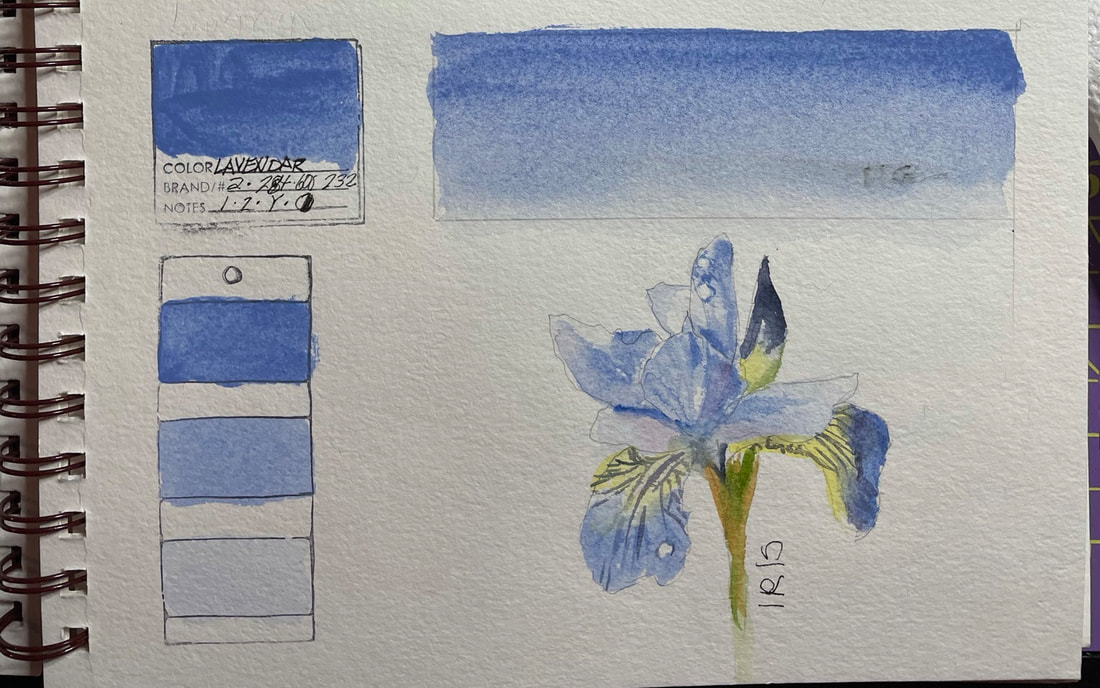
Technical Data:

Pigment: PW 6, PV 15, PB 29 | Series: 2
Lightfastness: I – Excellent
Transparency: Semi-Transparent
Staining: 2-Low Staining
Granulation: Granulating

LAVENDER

Lavender is one of the 12 Colors of Inspiration in one of Daniel Smith's Hand Poured Half Pan Watercolor Sets.  This gentle periwinkle blue is semi-transparent and a great choice for florals.  I found it granulated well and was perfect for painting an iris. Some artists have found it to be a wonderful layer in shadows.
0 Comments

The "Swatch This" Challenge Day 5

1/5/2021

1 Comment

 
Picture
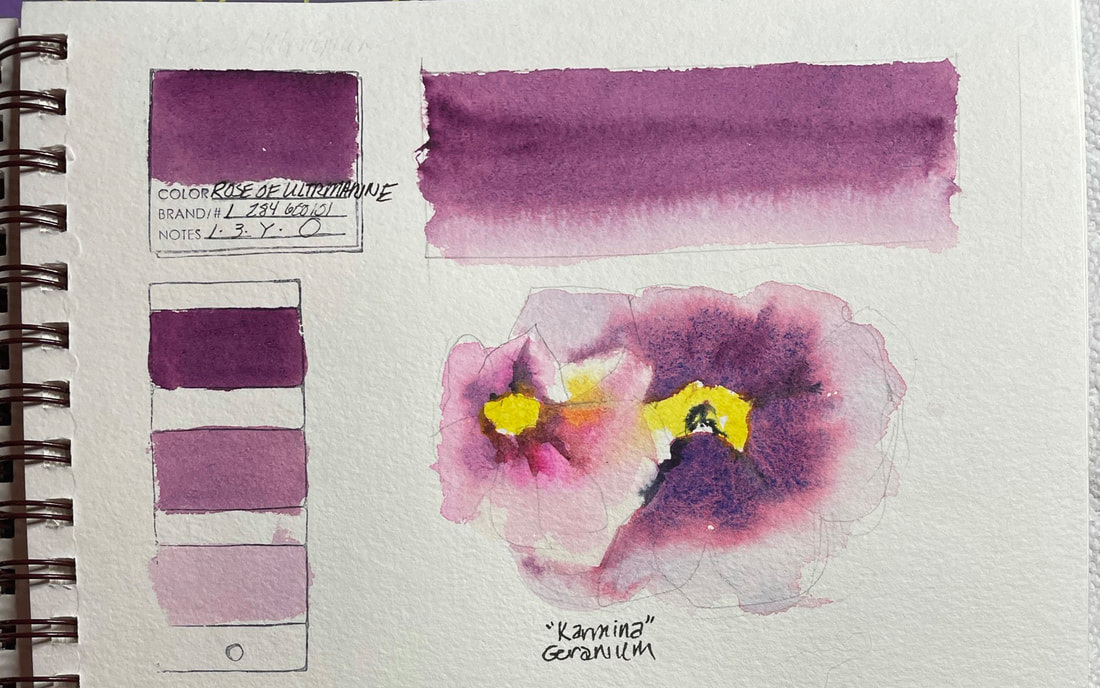
Technical Data:

Pigment: PB 29, PV 19 | Series: 1
Lightfastness: I – Excellent
Transparency: Transparent
Staining: 3-Medium Staining
Granulation: Granulating

​

ROSE OF ULTRAMARINE


Rose of Ultramarine is a combination of Quinacridone Rose and Ultramarine Blue. Ultramarine Blue settles into the surface while the Rose floats to the top making a complex purple. Daniel Smith's website suggests experimenting with layering Rose of Ultramarine with pure Phthalo Blue for some fun.  As a scene stealer, this color works well takin center stage and letting the other pigments settle as supporting actors.
Daniel Smith has included Rose of Ultramarine in their  
Colors of Inspiration Hand Poured Watercolor Half Pan Set. 
1 Comment

The "Swatch This" Challenge Day 4

1/4/2021

2 Comments

 
Picture
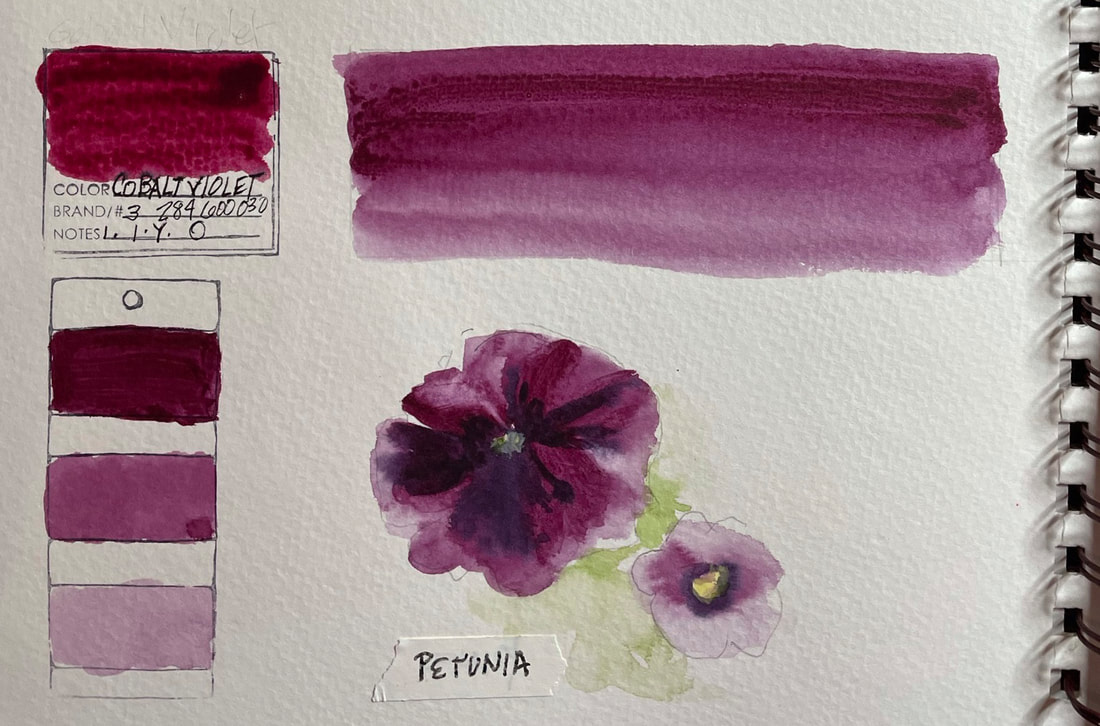
Technical Data:

Pigment: PV 49 | Series: 3
Lightfastness: I – Excellent
Transparency: Transparent
Staining: 1-Non-Staining
Granulation: Granulating

COBALT VIOLET

Cobalt Violet  is a non-staining, granulating pigment that comes alive as it is layered, creating soft edges and building from a light purple to a more complex violet at full strength.  
 What is a Sedimentary Color?
Sedimentary pigments include the earth pigments, Indian Red, Ultramarine Blue and Violet, Cerulean Blue, Cadmium Orange, Cobalt Green and Cobalt Violet, among others. Artist Caroline Buchanan elaborates, saying when a sedimentary pigment is glazed over the top of a staining first wash, its grains separate slightly allowing the staining pigment to shine through, adding that in the same sense two notes played together are more interesting, a sedimentary color played with staining pigment creates a chord of color and luminosity.

From the article: Caroline Buchanan: Making Sense of Staining, Sedimentary and Transparent Pigments on Daniel Smith's website.
2 Comments

The "Swatch This" Challenge Day 3

1/4/2021

0 Comments

 
Picture

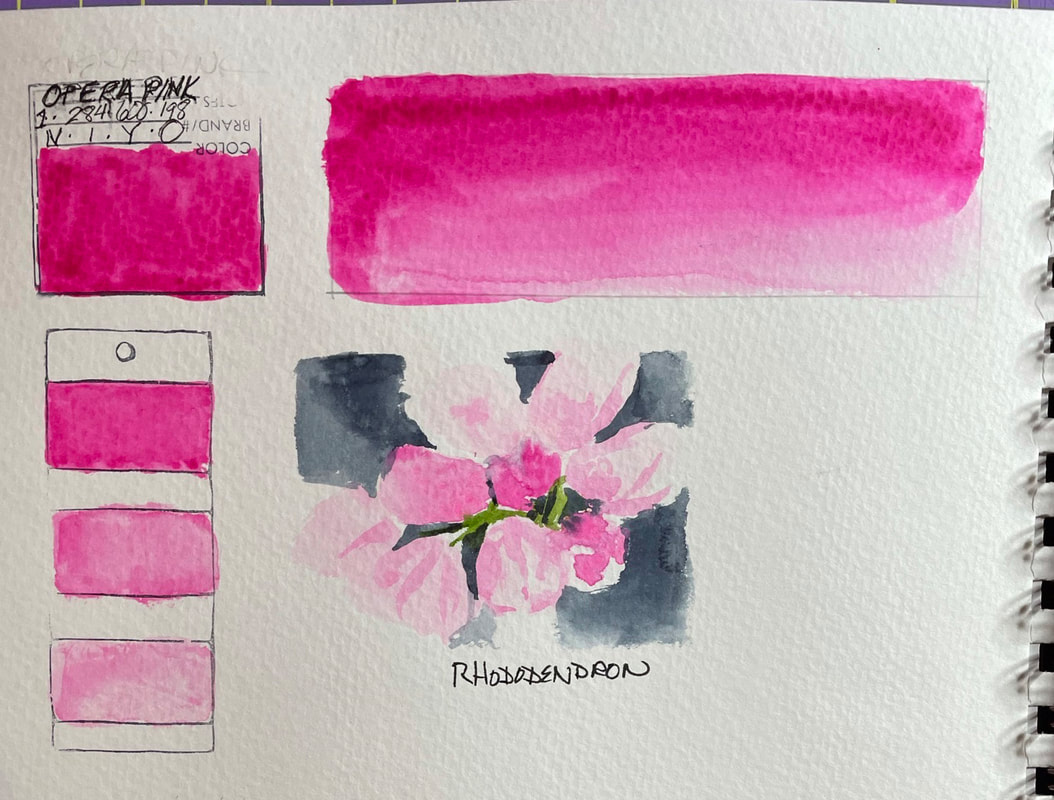
OPERA PINK

Daniel Smith's  own enticing description of Opera Rose may lure you as effectively as the color itself. "The most vivid of all pinks, has long been requested by DANIEL SMITH customers. A primary magenta with a hint of fluorescent pink granulation producing some of the most brilliant glowing mixes you have ever seen. Try mixing Opera Pink with our New Gamboge for fiery oranges or with an Indanthrone Blue for stunning violets and glowing purples." 
CAUTION!!! This one is a fugitive.
Technical Data:

​Pigment: PR 122 | Series: 1
Lightfastness: IV–Fugitive (You have been warned)
Transparency: Transparent
Staining: 1-Non-Staining
Granulation: Granulating
What is fugitive color?
Some pigments, especially violet reds like rose, carmine, magenta or maroon, hues that rarely occur in inorganic pigments, when exposed to strong sunlight, humidity, temperature, pollution are impermanent. They will lighten, darken or change completely and should be considered temporary.
Modern chemistry has made some remarkable advances within this hue group. My father, (remember, he was a chemist) worked for Dupont and spent part of his early career working to come up with a less transient red dye). 
So devious these spectrum standouts, a feast for the eyes and the soul, yet they should be avoided or at least only used for fun, never in a professional watercolor painting that you intend to sell. 
You may find conducting your own experiment to test this enlightening:
Paint opera pink (or any of the others named above) in a solid swatch  or row of swatches if using several colors, and then a second identical row. Cover one row up with a solid piece of watercolor p:aper or cardboard paperclipped to it. Set the test sample in a window with strong light for a few weeks or months and then take a peek at the row that has been covered up. You may be surprised at what has happened to that beautiful pink that glowed its way into your heart.
0 Comments

The "Swatch This" Challenge Day 2

1/3/2021

0 Comments

 
Picture

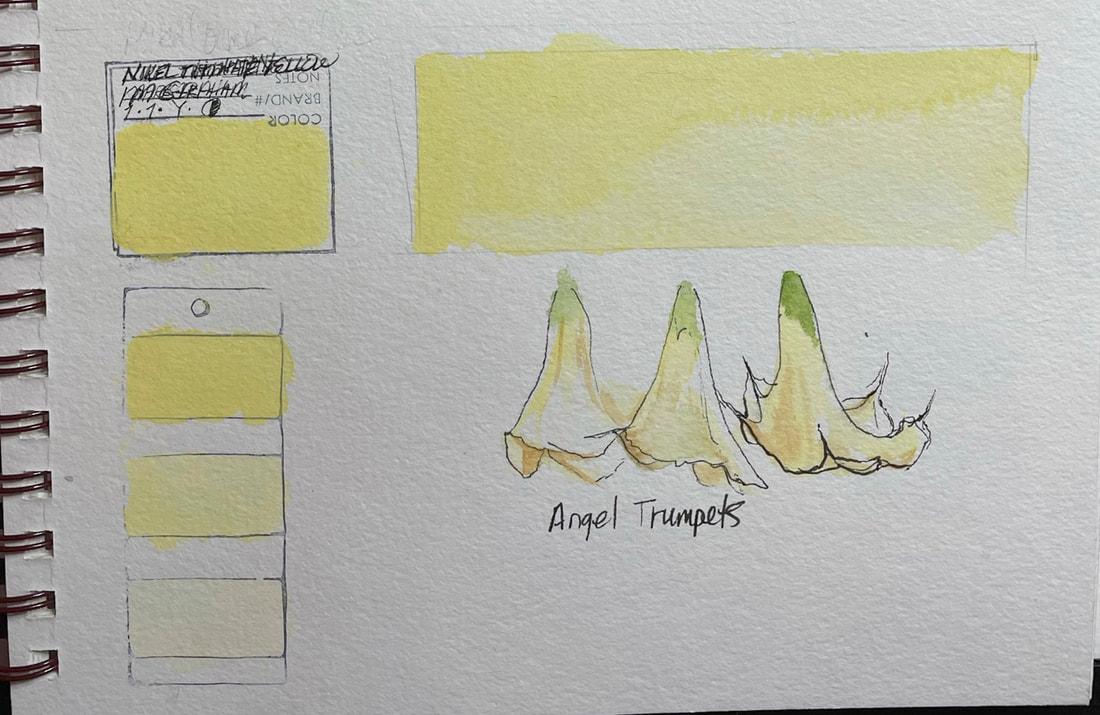
NIKEL TITANATE YELLOW

Technical  data:

Pigment: PY 53 | Series: 1
Lightfastness: I – Excellent
Transparency: Semi-Opaque
Staining: 1-Non-Staining
Granulation: Granulating

Nikel Titanate Yellow is a semi-transparent to semi-opaque yellow,  that leans toward green.  This granulator can appear opaque yet can also be lifted well. Daniel Smith's website describes it as "low staining, making it excellent in portrait mixtures for dark flesh tones. Use concentrated to diluted mixtures in florals and field flowers. This lemon yellow hue works well with purples and all the greens." 
Nikel Titanate is one of the coolest yellows in my palette. Placed next to Hansa Yellow Light, Nikel Titanate makes Hansa Yellow look warm.

0 Comments

The "Swatch This" Challenge Day 1

1/3/2021

0 Comments

 
Picture

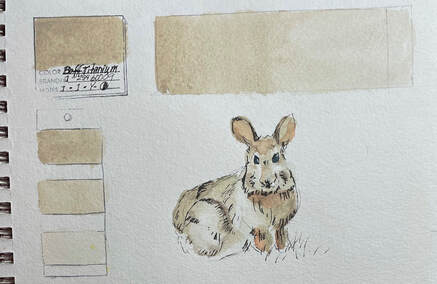
BUFF  TITANIUM

Buff Titanium is exclusive to Daniel Smith. It is described this way on their website "Spatter or drop a brush load of Buff Titanium into a moist wash and enjoy the pigment displacement, it is especially effective used that way to make clouds in the sky. Unique to DANIEL SMITH, Buff Titanium resembles the ecru shades of sand and antique lace and simulates the porous texture of an eggshell. It is a most welcome neutral, with its’ semi-transparent to opaque, non-staining properties. Pre-mix Buff Titanium with Quinacridone Rose or Perinone Orange for subtle hues and matte surfaces ideal for the velvety petals of your favorite flowers. Mix with Indigo or Van Dyke Brown to create slate-colored shadows and soft feathers. Glaze a dried landscape with a misty, atmospheric mood". 
Buff Titanium is one of artist, uuthor, and reigning color expert, Jane Blundell's 12 pigment selection (see her articles on the Daniel Smith website). Blundell likes this pigment for its granulation and that it creates nice pastels, but more importantly it is a palette must have for sand, marble and flesh. 
Artist Jane Davenport likes the semi-opaque nature of Buff Titanium and uses it as an undercoat for staining colors making them less apt to penetrate deep into the paper before having a chance to move them around.
Technical data:
Pigment: PW 6:1 | Series: 1
Lightfastness: I – Excellent
Transparency: Semi-Transparent
Staining: 1-Non-Staining
Granulation: Granulating
 What is  a "Granulating Color" - If you want to geek out a little, Daniel Smith has a brochure on their website that is quite scientific, but I will do my best to simplify it here. Pigments have different sized particles as part of their properties. Certain colors, like the Quinacridones and Pthalos have little tiny particles and go on the watercolor surface quite smoothly. Other pigments, especally any in the Daniel Smith Primatek range, as well asthe earth pigments, ultramarines and cadmiums, have much larger particles which want to clump together and lay on top of the surface. Using a granulating color on a rough watercolor paper enhances that characteristic with very interesting and somewhat uncontrollable results. Left to their own, granulators are good rendering exceptionally realistic textures like rust and landscape features.
0 Comments

Somewhere Over the Rainbow

1/3/2021

2 Comments

 
I was a bit of an odd child growing up. I suppose that is no surprise, often, creative types are a little different. I spent a lot of time wondering about things, like why even on my hands and knees peering through the holes in the open weave of the grille cloth on our hi-fi I couldn't quite make out the tiny little ballet dancer and orchestra I just knew were in there dancing and playing the Nutcracker Suite. I could be found gazing deep into a prism, fascinated by how the whole rainbow lived not only within it but colorized the sidewalk and my fleshy little hand.
As I got older, I wanted to know how everything worked, literally what made the clock tic. I took things apart, sometimes even managed to get them back together again before a parent found out, and learned the inner workings of the world around me by experience. It didn't matter that I didn't have the internet, we had an amazing set of encyclopedia Britannica's to go to when puzzled about something. I suppose my father made that very expensive purchase way back in the early 1960's knowing he would have a brood of inquisitive kids. He was a scientist with a brilliant mind and when the encyclopedia failed me, I could always count on him to either have the answer, or be so intrigued by my question that he would surely find the answer for me.
Of all the wonders in my world, the most captivating was anything about color. Since my earliest memory I experienced this phenomenon that I can't explain, that involved seeing colors around people, and each color had a sound or note associated with it. Revealing this to my father, the guy with the scientific mind and a card carrying member of the skeptics society was probably risky. Fortunately he also loved me very much and didn't outwardly question the validity of my claim. I don't really know if he believed me but he didn't dismiss the notion as far as I could tell.
I've long since learned not to openly admit to seeing and hearing colors that way now that I am wiser about such things. I have also learned that the fact that I see colors so vividly is something that not only has scientific basis but a fancy name, Tetrachromacy (‘Super Vision’). In short, it is a genetic mutation that causes the ability to see not just three channels of color like most, but four channels. It is more common in women because it is carried in the x chromosome and often a daughter of a woman with Tetrachromacy also has it.

"The existence of this extra photopigment may allow a tetrachromat to see more detail or variety within the visible spectrum. This is called the theory of tetrachromacy.  While trichromats can see about 1 million colors, tetrachromats may be able to see an incredible 100 million colors, according to Jay Neitz, PhD, an ophthalmology professor at the University of Washington, who has studied color vision extensively."

I can't verify whether I am a Tetrachromat or not, but I strongly suspect so. I am also very light sensitive making light and colors so bright at times to be almost painful.

Knowing this explains, or at least may help to excuse, my obsession with color. Some people are easily placated with gifts of chocolate or flowers, and while I wouldn't refuse either, give me a color wheel, a swatch book or a paint chart and I will swoon. I can be completely absorbed by making page after page of color charts and comparisons. I have books full of color notes I have made during one course or another about color theory or from various painting classes.

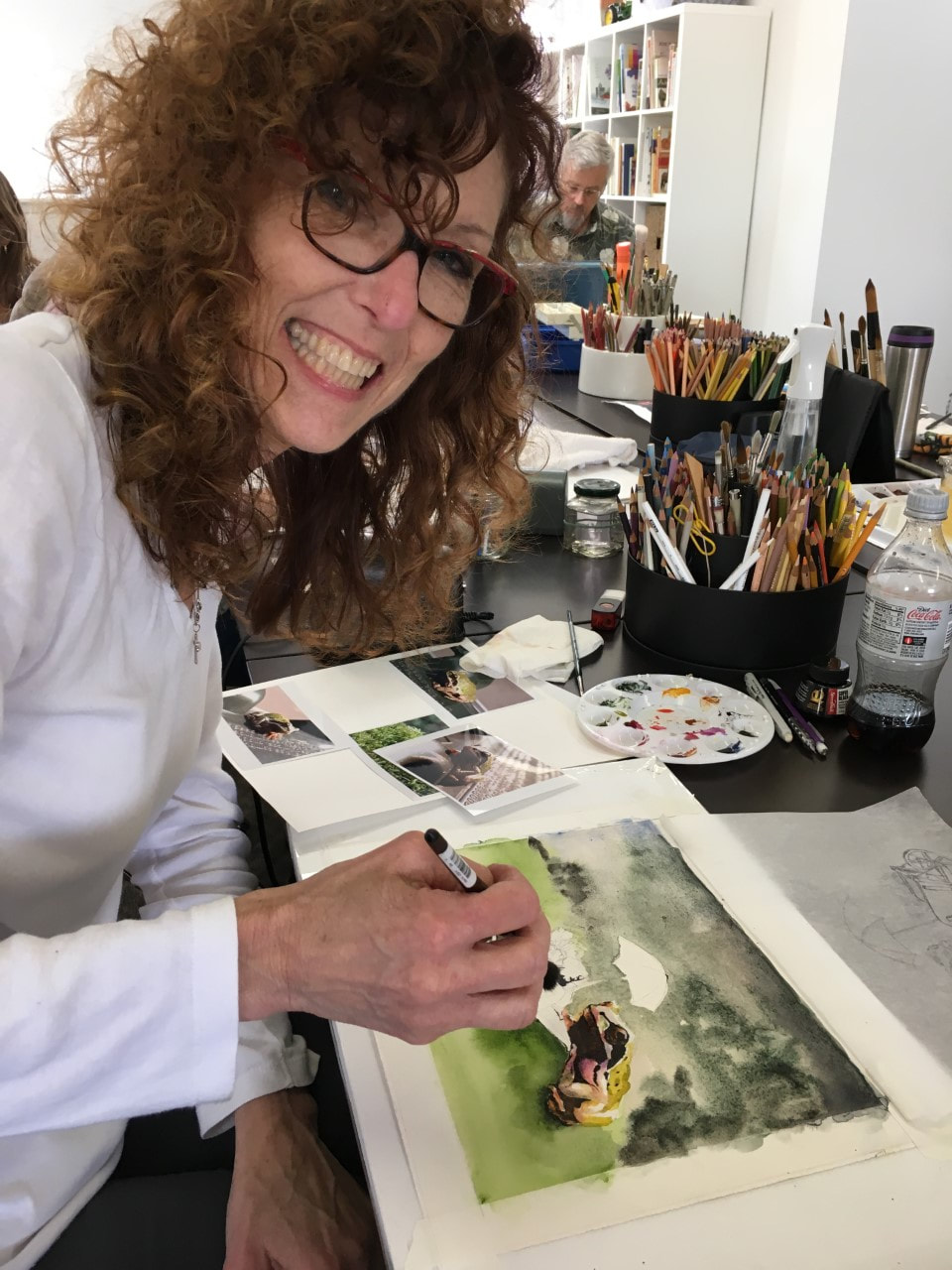
Recently, in a class taught by artist and mentor Charlene Collins Freeman about granulating watercolors, we were given homework that included making swatches of the special granulating pigments made by Daniel Smith. Of course I was over the moon about the assignment. I excitedly began to look up, learn about and paint pages of swatches of the granulating colors that I own.
And then it hit me, a new game, a challenge that I have now committed so fully to that it has become a new "healthy" habit and since I am also a bit compulsive, now must be part of each day.
Picture

Swatch this!

Picture
Here is how the game goes:
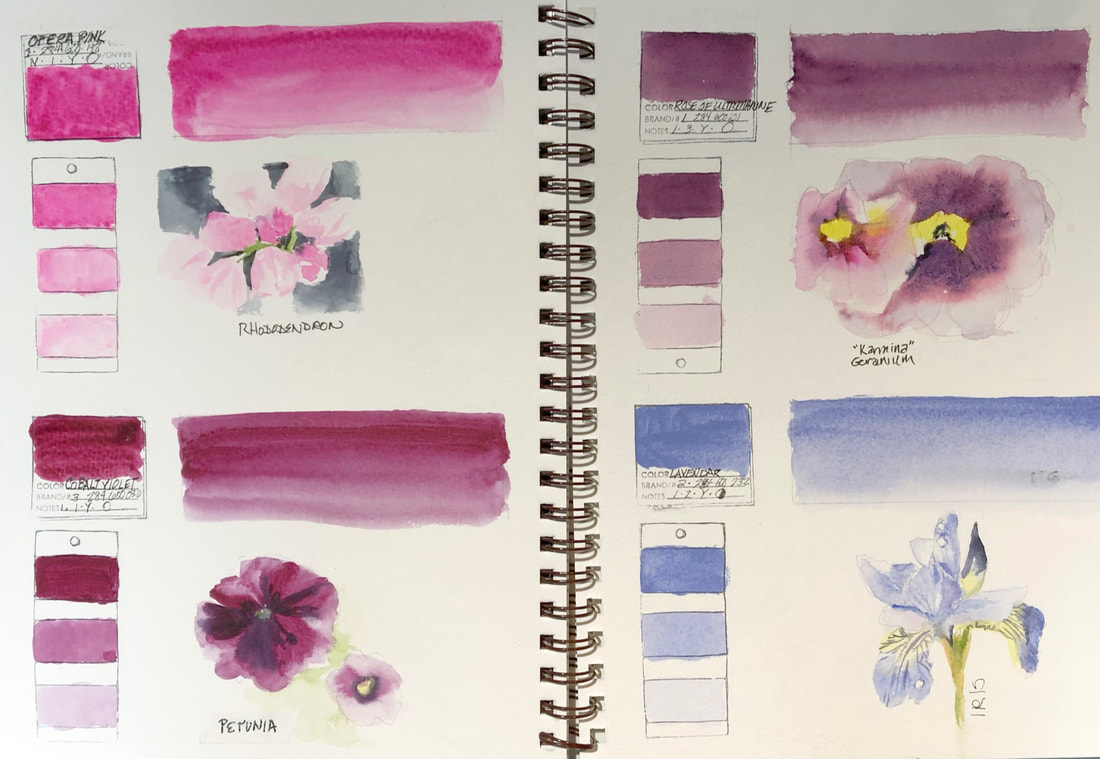
After painting a swatch of the color I am learning about, I paint it again with three values, the darkest value I can make with the color, a middle value and the lightest wash I can get. After that I paint a larger patch of the color, wet into wet, dropping its darkest value into the band of color and letting the thicker, milky consistency of the pigment swim into the watery version of the color to see how it acts, blending it a bit across the band but not with much effort. The point of the exercise here is just to see how the color likes to play with water.
I make notes on the swatches from the labeling system that Daniel Smith uses on their tubes pigment; designations or grades about the pigment's light fastness, whether it is transparent or not and how transparent, and that it is a granulating color.

Of course I cannot leave well enough alone, I have to take it a step further. I test the color out in a very quick watercolor sketch that is primarily the color of the pigment with one other color if needed to make the sketch "read" as the subject I intend. The other color has rules though, it has to be on my palette, not a brand new color, which means I probably have used it very recently on another "swatch sketch" either on the same page in my sketchbook or a close neighboring page.

But wait, there are more rules: the watercolor sketch cannot take more than 5 minutes, but ideally only 2-3 minutes, should be freehand or only a very rough pencil sketch to  find some trickier details before painting the sketch.  And, to make the challenge even more interesting, I have to randomly pick the subject by its color from within my library of photos on my iPhone. I have a mere 15,000 photos to choose from, and I am pretty sure that while that is a large number of images, I am not the only one who has that much reference material at the ready. It is fun to "spin" my way through the library as if it were a roulette wheel and when I see the color go whizzing by, stop on the color no matter what the image and that is what I have to sketch.
I found that randomness to be a necessary rule because I know myself all too well and if I had not made up that rule, I would spend the entire allotted sketch book time laboring over what to paint. That ploy will waste and entire painting session every time.
The rewards from the challenge make all those rules worthwhile. I learn experientially as well as from research about each color, how it is made and from what. I learn to trust myself and my abilities, not worrying so much about a perfect little drawing, they rarely are, but being content with their rapid execution and looseness and enjoying the essence grabbed from a randomly chosen photo and the characteristics of an interesting pigment.

I invite you to join me in this little game. I have great plans to post one of the sketches here each day until I have exhausted the pigments I have in my collection. We shall see if that is where this ends, or if I start wondering about something new.

Picture
2 Comments
Forward>>
    Picture

    SOUL

    “I am a contemplative artist who has trouble accessing verbal skills. Finding the right words to talk about the amazing things I observe around me can be frustrating. It is much more natural for me to pick up a paintbrush, some embroidery floss or my camera when I wish to share some new discovery. The artwork I create is meant to be enjoyed on whatever level the viewer experiences it and not layered with complex meaning. Feathers, fur, flowers and the incredible variation I find in wildlife not only inspire me, but compel me to share every nuance with you.

    Archives

    July 2024
    April 2024
    June 2023
    September 2021
    August 2021
    July 2021
    June 2021
    May 2021
    April 2021
    March 2021
    February 2021
    January 2021
    September 2020
    August 2020
    May 2020
    February 2020

    RSS Feed

Home

HEARTITUDE

ART

SOUL

Contact

Proudly powered by Weebly
Heartitude=Art+Soul
Copyright © 2020
  • Home
  • CLASSES
    • ON-DEMAND CLASSES
  • GALLERY
    • Portraits of Pets
    • Hand Painted Silk Scarves
    • Watercolor Birds
    • Fiber Arts
  • SOUL
  • Contact
  • Student Gallery
  • ONLINE STORE